


CISM STRENGTHENS REGIONAL COOPERATION FOR SURVEILLANCE OF ANTIMALARIAL DRUG RESISTANCE IN MALARIA

Antimalarial drug resistance occurs when the malaria parasite develops mutations in its DNA, reducing the effectiveness of medicines used to treat the disease. According to experts, the increase in these cases represents a significant challenge for African countries, including Angola and Mozambique, where malaria remains one of the leading causes of illness and mortality. It is in this context that the Centro de Investigação em Saúde de Manhiça (CISM) has been strengthening regional scientific cooperation to monitor parasite resistance to antimalarial drugs, a phenomenon of concern to public health experts due to its spread and rapid progression observed in different parts of the world.
The initiative is part of joint efforts by the National Directorate of Public Health, the National Malaria Control Programme, the National Institute for Health Research of Angola, the Barcelona Institute for Global Health, and CISM.
Within the scope of this collaboration, partners are developing Molecular Malaria Surveillance activities, a strategy considered essential for early detection of mutations associated with drug resistance and for supporting national programmes in updating treatment protocols, as well as malaria control and elimination strategies.
The cooperation is also part of the regional TES-Angola project
The cooperation is also part of the regional TES-Angola project, an initiative focused on strengthening molecular surveillance of antimalarial therapeutic efficacy in Angola. The project aims to reinforce genetic monitoring of the parasite and strengthen the technical and scientific capacity of Angolan institutions in molecular biology, promoting greater future autonomy in monitoring antimalarial drug resistance.
According to the researchers involved, molecular surveillance complements traditional epidemiological surveillance systems and allows for more precise, rapid, and integrated tracking of the evolution of parasite resistance within the decision-making processes of national malaria control programmes.
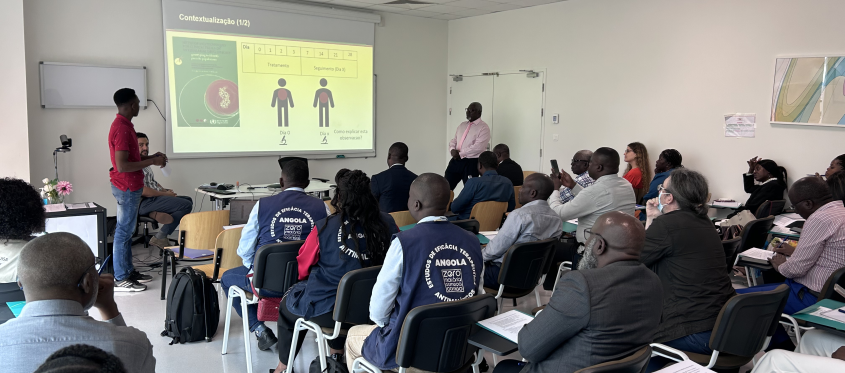
As part of this process, a workshop on Molecular Surveillance within the TES-Angola project was held in Luanda, Angola, on May 13–14, bringing together various Lusophone experts, researchers, and technicians to discuss strategies for monitoring therapeutic efficacy, antimalarial resistance, and the application of genomics in malaria surveillance and elimination. The workshop was preceded by laboratory activities that included practical and theoretical sessions on molecular biology techniques, DNA extraction, sample preparation for sequencing, and interpretation of genomic data applied to malaria surveillance.
Angola has been conducting antimalarial therapeutic efficacy studies since 2013, following recommendations from the World Health Organization (WHO). Until recently, molecular processing of samples was carried out at the laboratories of the Centers for Disease Control and Prevention (CDC) in Atlanta, United States of America. With the end of this international support, a partnership was established with Centro de Investigação em Saúde de Manhiça (CISM) and Barcelona Institute for Global Health to ensure the continuity of sample processing and analysis, as well as to promote knowledge and technology transfer to Angolan institutions.
The organisers consider that cooperation between Angola, Mozambique, and Spain represents an important step towards strengthening scientific research in Africa and developing more effective regional responses to the fight against malaria.
In a context where drug resistance threatens to undermine progress made in controlling the disease, researchers argue that investment in molecular surveillance, scientific innovation, and training of specialised human resources will be key to supporting national malaria control programmes and accelerating efforts toward malaria elimination in the Southern Africa region.
Conheça o contributo do CISM na área da Malária


