


New paper Shares the Experience That Led to the International ISO 15189 Accreditation of the CISM Laboratory

The scientific article describes the eight-year journey that enabled the laboratory to become one of the few accredited research infrastructures in Mozambique.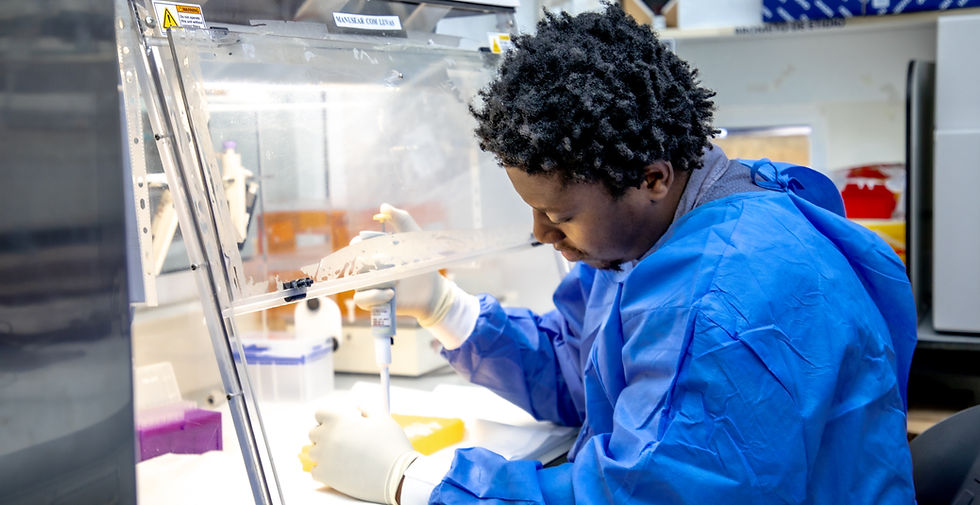
A team of researchers from the Manhiça Health Research Centre (CISM) recently published a scientific article documenting the journey, challenges and lessons learned during the process that culminated in the achievement of ISO 15189 international accreditation, one of the world's most recognised standards for quality and competence in clinical laboratories.
Published in the African Journal of Laboratory Medicine, the article entitled “The road map for ISO 15189-laboratory accreditation: The Experience of Manhiça Health Research Centre (CISM) laboratory, in southern Mozambique” describes the path followed by the CISM Laboratory between 2012 and 2020 to achieve this important institutional milestone.
ISO 15189 accreditation is a formal recognition granted to laboratories that demonstrate high standards of quality, technical competence and reliability of their results. Beyond validating laboratory processes, this accreditation ensures that the results produced comply with internationally recognised standards, reinforcing the confidence of researchers, healthcare professionals, partners and regulatory authorities.
According to the authors, quality laboratory services are essential for the effective functioning of health systems, as they support disease diagnosis, clinical decision-making, epidemiological surveillance, outbreak response and scientific research. However, many low- and middle-income countries, including Mozambique, continue to face challenges related to limited resources, reduced laboratory capacity and the need to strengthen quality management systems.
The formal process began in 2012
It was precisely to address these challenges that the CISM Laboratory initiated, more than a decade ago, a comprehensive process of continuous improvement aimed at achieving international accreditation. The article reveals that the formal process began in 2012 with a baseline assessment based on the Stepwise Laboratory Improvement Process Towards Accreditation (SLIPTA), promoted by the World Health Organization (WHO). This assessment made it possible to identify areas requiring improvement in order to meet the requirements of the ISO 15189 standard.
Currently, the accredited areas include the identification and quantification of Plasmodium species by microscopy, haematology analyses, biochemical testing, CD4 cell counting, interferon-gamma quantification, molecular diagnosis of malaria by real-time PCR, rotavirus detection and genotyping, as well as bacterial culture, microbiological identification and antimicrobial susceptibility testing.

According to Delfino Vubil, a CISM researcher, first author of the article and former Head of the Laboratory, the accreditation ensures that the results produced by the laboratory are internationally recognised, strengthening the scientific credibility of the institution's research and facilitating its participation in multicentre studies and international clinical trials.
“This accreditation represents not only a recognition of our laboratory's technical quality, but also a strategic tool to reinforce confidence in the results we produce and to expand opportunities for international scientific collaboration,” the researcher highlights.
Delfino Vubil further notes that this publication is likely the first scientific description of the ISO 15189 accreditation process undertaken by a private, non-profit organisation dedicated to research in Mozambique. “By sharing this experience with the international scientific community, we hope to enable other institutions to benefit from the lessons learned and accelerate their own quality improvement processes, thereby strengthening laboratory systems and health research in Africa,” he concludes.
Reference
Vubil, D. C., Cossa, A., Salvador, E., Bene, M., Manhiça, G., Jairoce, C., Mambuque, E., Quimice, L., Macete, E. V., Saute, F., & Mandomando, I. (2026). The road map for ISO 15189-laboratory accreditation: The Experience of Manhiça Health Research Centre (CISM) laboratory, in southern Mozambique. African Journal of Laboratory Medicine, 15(1), a3153. https://doi.org/10.4102/ajlm.v15i1.3153


