


From Malaria to Global Health: The Story That Began in a Small Room at Manhiça District Hospital

Updated: Aug 13
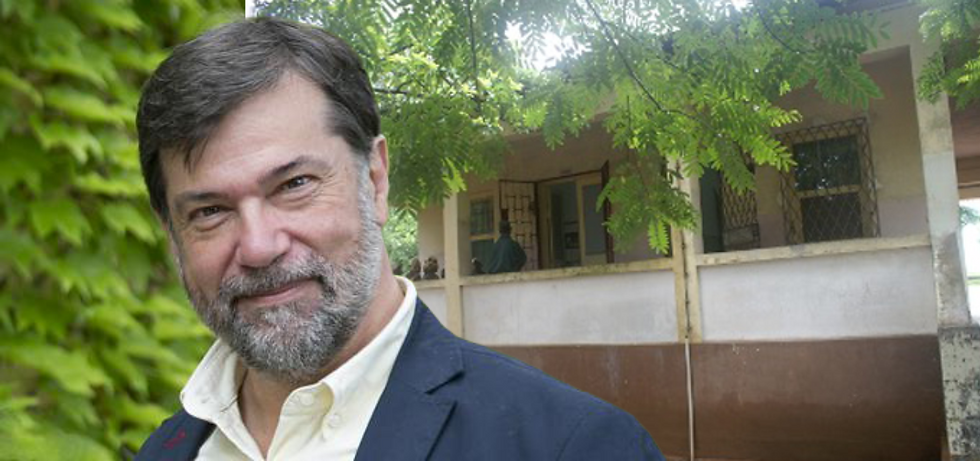
During the Gala Commemorating the 30th Anniversary of the Manhiça Health Research Centre (CISM), CISM Founding Scientific Director Pedro Alonso, CISM Director-General Francisco Saúte, and Head of the Malaria Area Pedro Aide revisited the institution’s main milestones. Three decades after its creation, CISM has become a national and international reference in health research, scientific training, and the development of solutions to major public health challenges.
It all started in Manhiça, with malaria
Pedro Alonso recalled that CISM was established in 1996 in a small space provided by the then Manhiça Health Centre, now Manhiça District Hospital. Reflecting on the institution’s early years, he explained that CISM was created in response to the profound inequalities in life expectancy between countries. “Thirty years ago, there were differences of more than 30 years in life expectancy, depending on where a person was born. That was not acceptable,” he said.
According to Pedro Alonso, this reality was at the heart of CISM’s creation and remains a challenge for the years ahead: ensuring that countries themselves have the scientific capacity to find solutions to their priority health problems. Mozambique has made extraordinary progress over the past three decades, particularly in reducing mortality among children under five. However, important challenges remain, especially in the areas of infectious diseases and maternal and child health,” he noted.
The founding scientific director also recalled that the first contacts between Mozambican and Spanish institutions began in 1993 and 1994, giving rise to the first scientific collaborations. “The place where it all began is a great testament to the fact that you do not need enormous infrastructure to do good science. We started in a very small room, where we conducted our first studies,” he recalled.
“Manhiça is not a product of Barcelona. Barcelona is a product of Manhiça.”
One of the most distinctive features of CISM’s history, according to Pedro Alonso, is that, unlike many research centres in Africa whose origins are linked to European or North American institutions, the Manhiça experience itself inspired the creation of an institution in Europe.
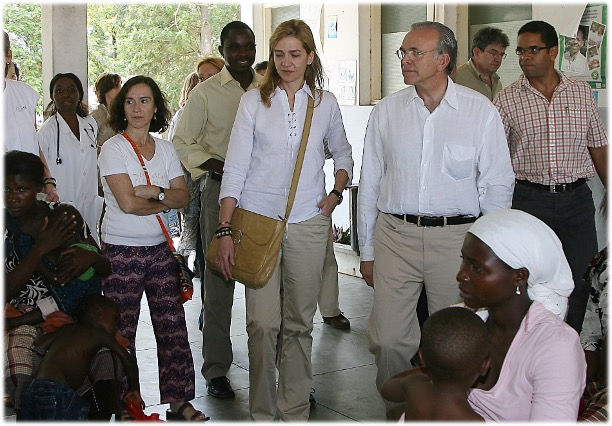
Pedro Alonso recalled that, following a two-day visit to CISM and Mozambique organised by Her Royal Highness Infanta Cristina, the then President of the “la Caixa” Foundation, Isidro Fainé Casas, was deeply impressed by the work being carried out by the Centre. “A month later, he called me and said: ‘You have to come and see me, because I was so impressed by Manhiça that we have to do something similar in Barcelona,’” he recalled.
According to Alonso, that decision led to the creation of the Barcelona Institute for Global Health (ISGlobal). “Manhiça is not the daughter of Barcelona. Barcelona is the daughter of Manhiça,” he said, in one of the most moving moments of his speech.
The researcher highlighted that this journey was only possible thanks to the continued support of the governments of Mozambique and Spain, numerous national and international partners, and, above all, the commitment of hundreds of researchers, technicians and other professionals who, over three decades, contributed to building and consolidating CISM.
From a cooperation project to a centre of excellence

CISM Director-General Francisco Saúte presented the Centre’s institutional evolution, from its creation as a technical and scientific cooperation project between Mozambique and Spain to the establishment of the Manhiça Foundation in 2008, the entity responsible for managing CISM. He explained that the Centre initially operated within an area of approximately 10 kilometres around Manhiça, covering a population of around 35,000 people.
Francisco Saúte recalled that the early years were marked by a shortage of specialised human resources and the need to develop local capacity. “We needed microscopists, but there were no professionals available. We had to train our own staff to work in the laboratories. We needed a data centre, and we also had to train technicians to carry out that work,” he explained.
The first step was the establishment of the Demographic and Health Surveillance System, which made it possible to establish a reference population for epidemiological studies. This was followed by malaria studies and clinical trials of medicines, vaccines and diagnostic tools. Over time, research expanded into areas such as tuberculosis, HIV, respiratory diseases, bacterial diseases, neglected tropical diseases, genomics, mathematical modelling, artificial intelligence and others.
Among CISM’s main contributions to public health policies, Francisco Saúte highlighted the generation of scientific evidence that supported updates to malaria treatment in Mozambique; the implementation of chemoprevention strategies, including intermittent preventive treatment in infants, perennial chemoprevention and seasonal malaria chemoprevention; as well as the development of the RTS,S vaccine. He also highlighted the Centre’s contribution to the introduction of vaccines against Haemophilus influenzae type b, pneumococcus, rotavirus and human papillomavirus into the Expanded Programme on Immunization, as well as the establishment of the Clinical Trials Unit and the laboratory’s accreditation according to ISO 15189.
The decisive role of the Manhiça community

Pedro Aide focused his intervention on the journey that led to the development of the RTS,S vaccine, describing malaria as “a story of fear, loss and inequality”. “While we are gathered here, somewhere in Africa, a family is losing a child to this disease.”
He explained that, for more than two decades, CISM led clinical studies demonstrating that it was possible to develop a safe vaccine capable of reducing clinical episodes of malaria in children. “This is not just the story of a vaccine. It is the story of what we can achieve when science, community and hope move forward together. When a mother decides to entrust us with her child, that is when everything happens. Thousands of mothers entrusted their children to us so that we could safely test what would become the first malaria vaccine,” he said.
Pedro Aide highlighted the decisive role played by the Manhiça community throughout this journey, through the trust placed in researchers and their continued participation in studies conducted by the Centre. Following the World Health Organization’s recommendation in 2021, Mozambique began introducing the malaria vaccine in 2024, marking one of the major milestones of the research conducted by CISM. “We continue to conduct research, train scientists and support national decision-making. We also want to follow the development of the next generation of vaccines,” Pedro Aide concluded.
CISM’s history demonstrates that an institution can emerge from a modest space and, through science, cooperation and the trust of communities, become an international centre of excellence, while remaining faithful to the mission that guided its creation: generating knowledge and solutions capable of improving the health and lives of populations.

